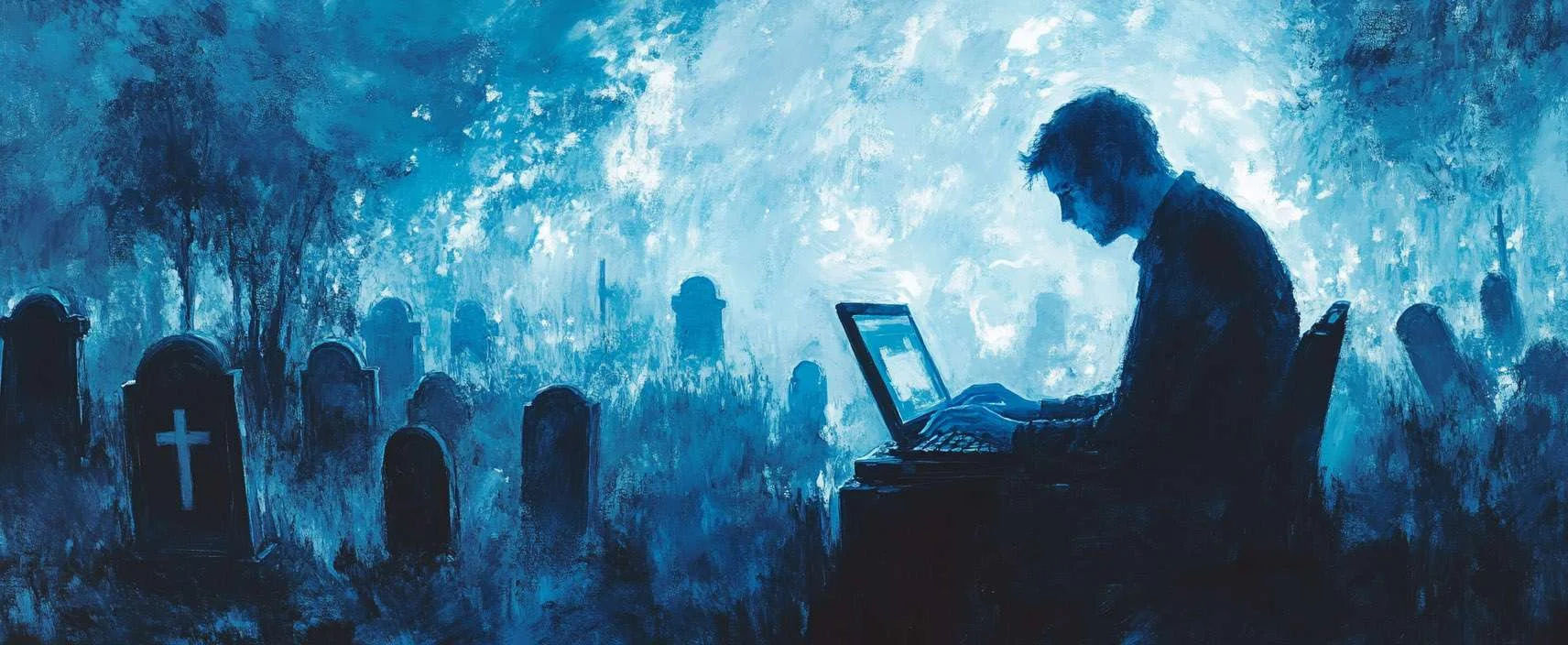
How Competing in Twisted50 Helped Me Break Through Writer’s Block and Self-Doubt
27 October 2024 · 12 min read
I’m a massive horror fan. Most of the fiction I read or the films and shows I watch are horror. Anything I write usually ends up with bad stuff happening to bad people and typically falls into that genre. So, you might be surprised to know that I initially wasn’t going to get involved in the Twisted50 Volume III competition.
However, I’m really glad that I did.
Taking part in the Twisted50 Volume III competition definitely helped my writing, by allowing me to:
Iterate quickly, based on good feedback (those useful and constructive insights)
Develop the confidence to quickly action beta reviews and editing passes by developing a better sense of ‘intention’ / more clarity on what I was really trying to say, etc.
Make new friends during the process and find new willing Beta readers
Find inspiration to write more. So much so that I almost couldn’t stop
Get multiple stories picked up for publication.
Why was I initially reluctant to get involved?
If you had asked me about Twisted50 Volume III initially, I would not have said that I was taking part. After all, I had entered the Children’s Xmas stories (aka Santa Calls) competition a few years earlier and had been rejected twice. Also, I was already knee-deep in writing and editing my own anthology, a collection of short horror stories that I have been working on for at least two years. And I had just pitched for and been accepted to write three short stories for other collections. So, any rational person would assume that the last thing I needed was to write another three stories for Twisted50, right? So, why did I do it? Why did I put myself through it?
Firstly, let me say that writing short horror stories is invaluable if you are the kind of writer (*points two thumbs at self*) that has a hard time finishing longer work. If you, like me, leave a lot of enthusiastically started and swiftly abandoned pieces lying around once you run into obstacles, tackling short stories is a great bit-sized way to get stuff done. I enjoyed the growing collection of work I was amassing, but I could always add more.
Deep down, I think I knew I needed to try. I’ve written several horror stories in my time, but usually found that the longer they were, the more of a chore they were to complete or to edit. They always came out long too long, meaning the process of writing and then editing them became much more of a grind. But I wondered if writing a short story of two thousand words would be less painful to write and easier to edit than a longer story. I figured the only way to know for sure, was to give it a try.
What appealed to me
There were several aspects that appealed to me:
After previously going through a period of writer’s block and dealing with a great deal of self-doubt and anxiety, I’d recently — with the help of my writing mentor Lucy — turned the edit of a story around to fix some plot pacing issues and to make it more impactful. Being unblocked, I suddenly felt like I could do anything.
Twisted50 operates as a group review, so I figured that I could be guaranteed honest feedback to help focus my edits from complete strangers who owed me nothing and could be as brutal as they needed to be.
As a member of the Bang 2Write Academy (B2W), I learned that a couple of members were experienced past entrants and readers for the competition, and other members of the Academy were also keen to enter the competition. So that doubled the potential for good feedback critiques — as we shared pages of scripts for review each Saturday.
However, the main reason for trying was to crack a plot structure that worked for a two-thousand-word length story. I had written flash fiction before, but without any real plan or sense of whether it would work out. But If I could nail it, I could submit it to many other publications, even if the story was not selected for inclusion in the eventual publication of Twisted50 Volume III. And I could always create more.
So, was it easier to create and iterate a shorter piece?
It was relatively easier for the most part. However, some stories were trickier than others.
The trickiest aspect, as always, was getting started.
I took the pressure off myself by just “seeing if I could do it?” I thought of it more like a fact-finding mission. I reminded myself that I’d written flash fiction before, though I had given up writing prose for 12-years, and it was a writing muscle I’d need to develop again. But you learn best by doing.
Here’s the rough process I used:
First, I read any flash fiction I could find. Looking for inspiration, from examples freely found on the web, promoted by other writers and small presses and that were already in the right ballpark target length.
Then I analysed them, looking for clues on the number of characters and scenes and what made them hit harder than others. And read stories of multiple styles, to get a feel for what I might write.
Then came the idea and the first attempt at crafting something for that target length. Seeing it purely as an exercise — to take the pressure off.
Story #1
I wrote MATER SEMINARIUM after hearing a true story from a fellow writer, Fi Maher. She had been harassed by her Airbnb landlord in the big smoke when she reported finding a stash of money and drugs in the room. Inspired by her trauma and the lack of resolution in that story (I never knew how it ended, why it happened the way it did, or how it was resolved as our conversation got interrupted and the writing course we were on ended — so my mind was racing after hearing it), and I very much wanted to empower her fictional character. As she’d been heading to seminars on paganism for real, why not make her fictional character a witch, for real? So, I had the backstory and the inciting incident. The rest was down to me.
The story was a joy to write and came together easily. I then pruned to size.
I read it and liked it and despite it being an exercise, I felt it could potentially work as an actual entry. So, I got some Beta reader feedback from two very kind readers in the Bang2Write Academy, and then actioned their comments. It was done and ready to be submitted as a first draft by then. But before doing so I then needed to send it to Fi — as I would need her approval to use the fictional take on her story and also to see if it worked as an example of what was possible. Luckily, she loved it and approved its usage in the competition and had some good notes to improve it. Though I was prepared to bury the story if needed.
Story #2
I enjoyed the process so much, while waiting for permission to use the first. So, I then wrote PHYSICIAN, HEAL THYSELF — a tale inspired by my own lack of engagement from the medical profession when looking into treatment for my chronic pain. Once both stories were done, it was time to get some more beta reader feedback, and a critical and knowledgeable eye on them from writers who also know the genre very well. Such guidance is good for sense checking everything, clarifying plot issues, and identifying any potential weaknesses or accidental similarities to other work. For example, the unconscious and unintended similarity of PHYSICIAN, HEAL THYSELF to DRAG ME TO HELL, as both stories feature a witch of possible Romany origins.
Submitting was straightforward but daunting — so many fields and clauses. However, the AI generated art elevated the tales when the stories were then added by the hard-working team that runs the site’s back end. Then came the very nervy wait for comments from other entrants. And within those comments were a few gems of very useful observations. Though the bulk of the most useful feedback was from the writers in my Bang2Write Academy writing group.
Story #3
Buoyed up by positive comments on the first two and inspired Chris’s comment in a Bang2Write Academy webinar about the Twisted50 competition (where he referenced a line, which if I remember was something like: “People say human flesh is like pork. I wouldn’t know, I’ve never eaten pork”) I then wrote the third story, ON THE HOOK, based on an old culinary cannibal idea I’d never managed to finish working with or fully develop as a screenplay. Though I felt it was potentially the weakest of the three, it was the most fun to write.
The critical aspect of Twisted50, the reading
So, I now had three stories in play. I also did the required reading and critiquing of other stories in the competition — you must read two in return for each story you enter. I ended up reading more stories when I didn’t gel with specific stories I’d read and either felt that I had nothing to add to the existing comments or nothing constructive. But I then also returned the favour and read the entries by other ‘Bangers’ in the Bang2Write Academy. Primarily to help those new to the genre and format.
The most challenging aspect of commenting on the stories was knowing whether you were helping or hurting the stories. Whether people really need to know something or not when considering adding more detail. Should you give line edits or keep it general?
The benefit of doing this reading, was knowing that you were all going through the same thing together. Learning how to take feedback and action it together and within the writing group — having lots of dialogue with each of the other Bangers and reviewing multiple drafts before they submitted them to the Twisted50 website.
The benefits of doing this
As I mentioned, I had multiple other pieces to write, so I never planned on writing multiple pieces for Twisted50 or putting them ahead of my other deadlines. But it did get so that I was hooked on writing more, though I cut myself off at three stories. However, by now, the pressure of my other deadlines was looming.
I used the same technique to write one of my pieces to meet an urgent deadline in a similar target length. Penning a nifty and breezy little torture piece for the White on White: A Literary Tribute to Bauhaus collection. Though there was no word limit on that story requirement, the length suited my time scales and the plot I intended to use. It also meant I had acceptance for the tale within a day of submitting it, as such stories are much quicker to read. This deadline was also met thanks to the very same beta readers helping critique the new story. They were immensely kind in dropping everything to help a panicking writer out.
Doing twisted 50 and daily #VSS (aka ‘very short stories’ — written in 300 characters or less) really helped me trim and whittle the stories to be punchier, and get to the point quicker. I like to think that this was a significant factor in getting three pieces penned and accepted, one after the other, in a veritable flurry of acceptances — one story accepted a week! It also helped to build that writing muscle and get into the habit of more regular practice both to sustain immersion in the peace itself, pace yourself, and not burn out so quickly. And to help build that idea-generation muscle, too.
I think it also helped me to get a better sense of intent. You can get all the feedback in the world, but unless you know what works for your story, or what to do with it, you’re going to have a hard time deciding what to implement to enhance the story. But having gone through the process multiple times, in short order, and being buoyed up by the confirmation of feedback helps tell you if you’re on the right track. This is much better than struggling alone in the dark and never really knowing until you finally get eyes on the story.
A word of caution
Don’t do what I did and take on too much work at once. I read around fifteen stories on the Twisted50 site and another twenty drafts on the Bang2Write Academy. Giving such feedback got in the way of my other writing deadlines. And naturally when it was all done and closed, and I had finally delivered the other stories to their rightful new owners, I felt well and truly burnt out. Collaboration is great, and producing at speed is excellent, but doing so for three months takes a toll. And unless you’re getting paid, take on only what is manageable to you, which benefits your growth.
In saying that, I did learn from each of the stories I’ve reviewed. I learned how to give more helpful feedback on developing the stories and enhancing what was great or unique about them. Working with these writers has turned us from colleagues to friends.
I’m glad that I did it, even if I did get a little too into it. And even if none of the pieces make it through the competition selection and into the final publication, I know that I’ve got three kick-ass stories to include in my own anthology or lead magnet — to help give readers a bite-sized taste of what I’m capable of. And now that I’ve cracked a completely self-made obstacle, I can create many more for submission, at a great target length, opening the tales up to a much broader catalogue of publications.
Last words
If you are on the fence about doing something for the next Twisted50 Volume, I recommend you give it some serious thought. I’m glad I did, and I am already waiting for the next Twisted.
Written by
Lee BailesLEE BAILES is a UK expat living in Sweden. A former film critic, screenwriter and filmmaker by night and instructional design consultant by day, he is mostly drawn to the dark Horror, Fantasy, Sci Fi and action genres.