Podcast Ep 005… Meet The Writers of T50 Vol III: Leo X Robertson and Eimear Kilcullen
8 February 2025 · 28 min read
Chris: So welcome to this podcast for Twisted 50 with me, Chris Jones, filmmaker, author and founder of Create50 and Twisted50 alongside Cristina Palmer Romero. Right back in the day, this is the first podcast that we’ve done post the closing of Twisted 50 volume three. And I’m delighted to have with me two very diverse writers in the Twisted 50 community. And we’ll get to how and why later in the podcast. We’ve got Leo and Ima with us, so welcome. How are you both doing? Leo, how are you doing?
Leo: Good, thank you. Happy to be here.
Chris: And where in the world are you?
Leo: I’m in Stavanger in Norway. It’s to the south and these days when I wake up, it’s actually sunny for the first time in months.
Chris: So that’s amazing.
Leo: You caught me on a good day.
Chris: And Eimear, whereabouts are you?
Eimear: I’m in Dublin, Ireland, and it’s a very wet day here.
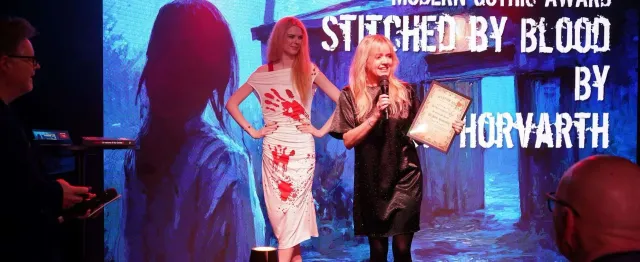
Chris: Right. And so geographically it means that neither of you managed to come to the awards the other night, but you did. I’m hoping you watched the video. Did you, did you have a sneaky peek at the video and how did it feel?
Eimear: Yeah, I watched the video. I was, I was, I wish I had been there, actually. It looked really good fun.
Leo: And Leo, I looked through all the photos. It looked like you’re. How did you feel? Like the most ambitious event or the most polished biggest thing? I don’t know.
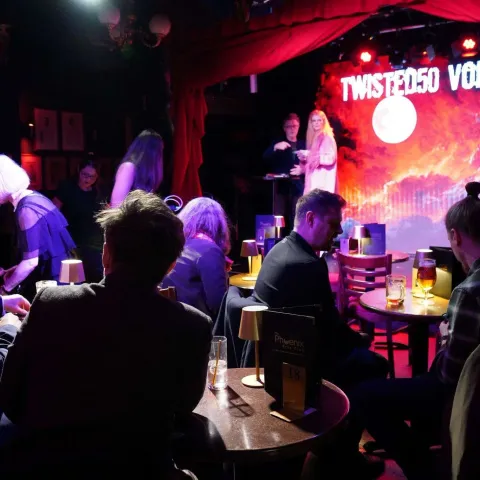
Chris: No, it certainly wasn’t our biggest Twisted party, but it was actually our most celebratory one. And in that way it was. I think the delegates. Oh, sorry. The writers who attended enjoyed it more than, than other ones. It was noisy and it was boisterous and it was very, very relaxed and the, the venue was just perfect for a central London, you know, great atmosphere. It went down an absolute storm.
So I’m very, very pleased that it all came together. So one of the things that’s really interesting about both of you is that you’ve kind of come from opposite ends of the spectrum and I just want to dive into that and we’ll do it individually and, and, and then kind of like have a conversation about it. But Louis, you began with twisted 50, volume one way back in, in, you know, 1812. And Ema, you’re a relative newcomer to it and also Louis, you’re demented and bonkers when it comes to horror. And Ema, you’re self confessed not really a horror person. So Eimear, why don’t we go first with you? How did you come to find out About Twisted and what is it about horror that initially you didn’t think you were into, but it turns out you actually do have a bit of a dark heart after all.
Eimear: It was Lucy from Bang to Write. I’m in her Bang to Write academy and she mentors me as well. And she said, suggested doing the twisted 50 horror. And she said, oh, you should try that. It’s really good initiative. It’s really supportive, supportive. It’s a really good community around it. I strongly advise you to, you know, try it out. And at this stage I hadn’t even written a short story because I’ve been focusing on writing a novel. So I was like, okay. So I started to read lots of horror short stories. And that’s when I actually discovered that I actually was totally had lots of misconceptions around horror.
And I actually really like horror. And a lot of horror authors were ones I actually had read. I just didn’t realise that that was considered horror. Like Shirley Jackson in the Lottery and I mean, that was the basis of the Hunger Games. And I love all of that, the trilogy. And I love her work. And you know, even going back to Mary Shelley, you know, another female writer. Yeah. And you know, I had this idea that horror was very violent. I don’t like violence. I definitely wouldn’t watch Saul. But that’s not what horror is about. You know, it’s a big. It’s a very wide ranging genre.
Chris: Yeah. It’s a very broad church of, of darkness, which is what I love about it as well. Your story, Ema. What, what was it called? And what, what was it about?
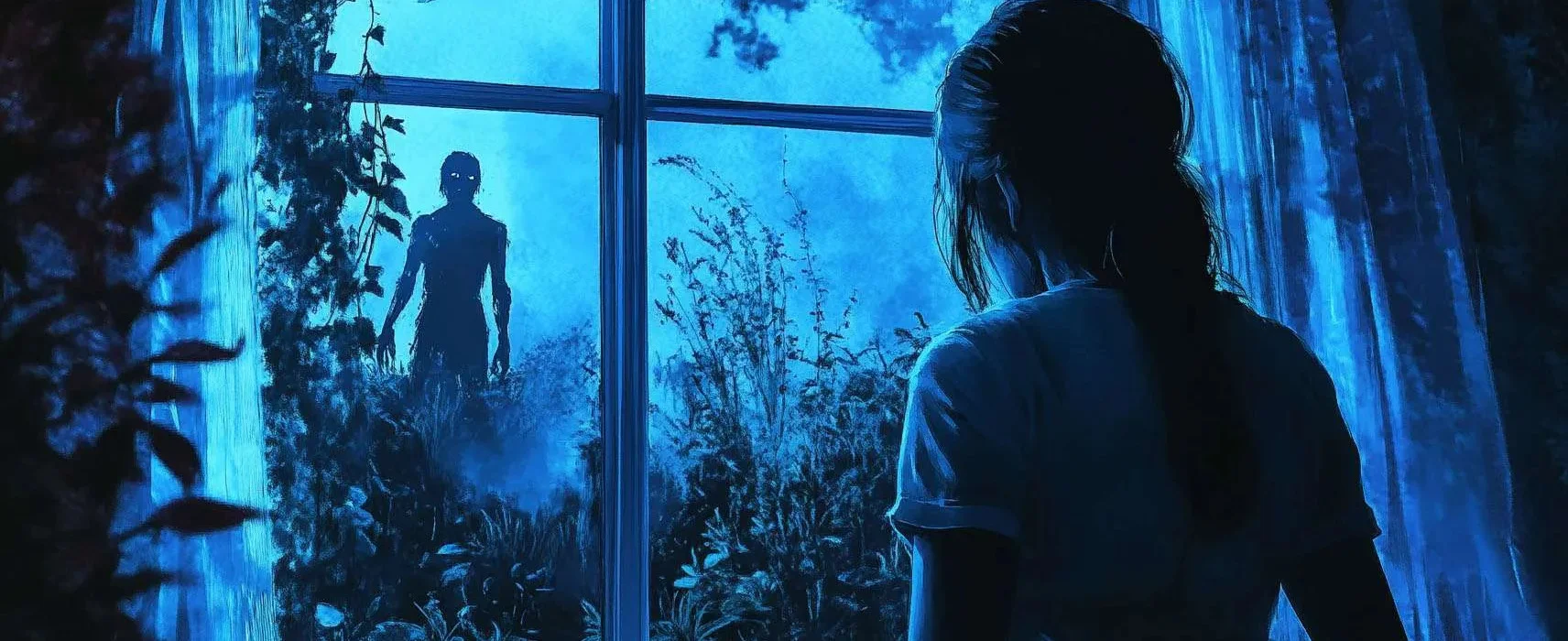
Eimear: My pet zombie. And it was actually from listening to your podcast about Twisted 50 where you said, oh, I don’t have a zombie story. I was like, oh, okay, he wants a zombie story. And so then I was like thinking, oh, okay, well, what would be a different take on zombies? And then it just. I was thinking about how people feed foxes and their neighbours hate it when you feed the foxes. I thought, geez, I wonder if a woman had a zombie in her garden, what would it be like if she started feeding it? How would people react?
Chris: So that’s always the basis of good story anyway, isn’t it? Is you take something that’s very, very true and very honest and so we can connect with it and then you spin it in a way that makes it slightly original. And horror, I suppose science fiction as well, and fantasy offers the greatest spin available because you can legitimately spin into other worlds beyond this world, which obviously gives us an opportunity to say something more or even deeper or more, I guess, profound and getting a little bit literate now.
But the one thing I loved about your story is one of the things I, I was very passionate about was the website. I’m a very visual person and because of the advent of Mid Journey, I decided to make a piece of artwork for every single story in the style of a horror movie painting. And yours was one of the ones I particularly loved. That woman looking out through the window at the zombie in the garden with the glowing eyes. It was just, it was such a cinematic image that, that, you know, looked great and it just, it just felt great. And I remember seeing it at the awards on, on the big screen. It just, you know. Fantastic, fantastic. Leo, let’s dive over to you now and let’s have a chat about your journey with Twisted and your passion and love of horror. So let’s go back all the way to the very beginning. It was probably 2014, something like that. And your first story and your love of horror.
Leo: Yeah, my first story was called the Audition Altar and it was about a guy who goes in for a job interview that turns out to be really sadistic and torturous, which of course was very little in the story. But it’s something that I think I was thinking about at the time because I had only recently gotten out of university and all of my friends were going for these interviews where people were being so much more demanding of them than I think they had any right to, really. You know, they’re asking for skills and talents and skills and behaviours and attitudes that are never going to come into play in the working world anyway. They’re just being very pedantic about it. And I found that unfair and made me angry and I wanted to do something kind of to demonstrate how torturous that was. And then I saw my character at the party, which was so weird. I was so weird. That’s right.
Chris: We, we. Because we actually brought actors in to play characters from some of the stories.
Leo: Yeah, yeah, yeah. And mine was picked and that was, that was. That was a huge honour. And it made me feel very, kind of flared up my imposter syndrome as well, I think to see something I’d create since walking around and me thinking, don’t deserve this. But. But then that’s the thing I think, is that twisted 50 does a. An unfortunately rare thing, which is that you celebrate and you make unique tributes to your authors and you make a big deal out of these books that are coming out. You know, they’re not just like PDFs are dumped online. Right. They’re bespoke items that get launch parties.
And I wish there was more of that. And I think that was my first accepted short story, like, ever as well. So then, of course, I stayed with you all and I was terrified of feedback as well, like I say about the imposter syndrome thing, but you had cultivated this lovely community and that’s so, so, so important and unfortunately rare in the arts in general, is that we’re not. I don’t think we are so supportive of one another, or we. Some people don’t have the talent to identify what is not working in a story, and the compassion and the articulateness to convey it in a way that only encourages and supports the author in question, you know, but Twisted50 has done that since the beginning very well.
Chris: Yeah, I mean, it’s something I’m. I’m very passionate and proud about. And, you know, fundamentally, it began as a community project. The. The idea was to get us all writing and then there was this thing at the end called a book that, you know, is almost a byproduct of the community and the process. But I also knew how important it was. I mean, at the Screenwriters Festival, we recognised very early on that what most people needed was that first real credit. And to be. The first project was a feature film. And to be able to say we’d had a feature film produced, it didn’t really matter that there were 50 writers involved. You still got to say, my script was produced and released in cinemas.
And it’s the same with Twisted is. My story’s been published. It’s on Amazon. You can buy it now. And it’s in the fourth volume or the third volume of a series of books. And that was. That was key, key to it. And, you know, even down to coordinating, buying the books in the same hour on the same day in order to push us to number one bestseller in the horror category, to knock Stephen King off the top spot, then we. At least we could say that, you know, we knocked Stephen King off the top spot. It just. It’s. It’s all part of that game that we have to play in marketing to elevate ourselves above, you know, the actual words on the page, which we hope are amazing as well. But, Leo, tell us about the story that you wrote for Twisted 50 Vol. 3 about the tinpot dictator.
Leo: Yes, it was called the Tinpot Dictator’s Deadly Orchestra. And it’s about a music teacher who just ritualistically takes one pupil at a time. Up to the front of the classroom and shames them for a different reason consistently, until he kind of seals his own fate in doing that. And legally, of course, I must say, it’s not based on anyone real. But, yeah, I just. I had a terrible time at school with teachers and I’m still kind of. I’m still confused and amazed by what school is supposed to teach us about life. Because in one way, it does set us up in that there are so many petty people who should not have, like, any power whatsoever, especially not over minors. And then you enter the working world and you think, well, I mean, lots of people are just very mediocre and resentful about it and taking it out on one another. And so if that’s your experience of school, maybe that is an accurate experience of life. And that’s horrible. That is horrific.
And so that’s what I wanted to express in my story is the horror of the vindictive nature of mediocrity, I think, and how it really. I mean, you think about it in terms of the twisted community and everything, how you need. How if you have an encouraging, supportive community, you can make something thrive. But that thing is very fragile because I think it’s very easily spoiled by even minorly bad actors. And in the case of my story, there’s an incredibly bad actor who fortunately rarely receives his comeuppance, which happens too early in life. I think that’s what my story’s about.
Chris: And there’s clearly a through line from your first story to your story in Twisted three. I mean, it’s thematically very similar, if not exactly the same.
Leo: That’s a very good point.
Chris: You have a look of revelation on your face, Leo.
Leo: I know. I hadn’t realised that. But I am thinking recently about how I have a very. If I had my own character flaw. It’s this constant desire for autonomy and agency in every situation. So when it comes to any kind of compromise or any kind of figure of authority, I’m so wary of it. But often I think we have a right to be. I think the people in positions of power, it’s just like whoever. Whoever was. It’s not like whoever showed the most drive in the situation. It’s about just whoever was there on the day or whoever’s pals with a guy who. Who had it in the first place. It’s. It’s. It’s a very unfortunate thing. So I guess in my writing I must be encouraging scepticism towards figures of authority because I certainly have a lot of it.
Chris: Yeah, yeah. I think it’s something that all creative people as well, you know, not all. I, you know, I train, I think, at the Screenwriters Festival called Talent Campus, and we, we do a little section on what seems to be common to a lot of creative people and we seem to have a lot of similar characteristics, one of which is a kind of aversion to authority. And I think it’s one of the areas where we unfortunately, you know, we struggle because there does come a point in any creative adventure, if it’s commercial, where you kind of have to interface with the accounts department and, and it’s kind of the last thing any of us want to do. We just, we just want it to be out there and earning its fair share or making its own way. But we’re, we’re kind of entering the lion’s den, really, where, where it’s run by.
By people who don’t have creative endeavours at the top of their list. They have a balance sheet that they want to. To balance and they want to make money. And so it’s, it’s a real challenge. And I think it’s one of the reasons Twisted works, because we’re not run that way. We don’t. We don’t run that way. Occasionally, Occasionally I’ll get some email from somebody saying, oh, you must be making a million out of Twisted. And I’m like, let me just send you an email with the latest royalty statement from Amazon and you’ll see that it’s not covering a coffee, let alone, you know, getting. Getting super rich. So. But again, it’s, it’s something that we all, we all struggle with, which is how to balance, you know, the passion, love and the creativity alongside the commercial and the entrepreneurial and the, the self marketing. And you mentioned imposter syndrome as well, Leo. And I think it’s something, you know, Lisa, who was at the awards the other night, she. She’ll be the first to tell you, because whenever we’ve done the Screenwriters Awards or I go on stage at the Screenwriters Festival, 10 minutes before I’m looking at her saying, what am I doing? Why have I done this to myself? And there’s a part of me that really does want to go into the bathroom and vomit because I’m like, I can’t believe I’ve put myself in this situation. Like, what. What have I done? In order for those people to actually listen to me when I’m standing there with a microphone, I just have to push myself on stage. And of course, as soon as I’M going, it’s okay. And it’s the same with us, you know, as soon as we’re writing and we’re in that zone, suddenly the imposter syndrome goes away. It’s only. It’s only when in certain circumstances that that little voice in our head triggers.
And it’s something that, you know, I try to. I try to not have present in create 50 or the screenwriters Festival, just because it’s not helpful for us. For us. And it’s part of that thing that, you know, we talked about for celebrating what. What we do. Eimear, I want to come back to you and talk about, you know, you talked about how you’re writing a novel right now and whether you experienced something that. A lot of people talk to me about, Twisted, which is. It’s a kind of like writing accelerant in so much as once you step into it, you kind of start writing more and faster and you get excited and you kind of get a little bit addicted to. To checking in on the website. Did you experience that and did you find the joy of writing elevated? Because there was a very clear goal, a very clear end point, and it was very fast turnaround.
Eimear: I find the deadlines and the feedback and the community incredibly helpful. And I did find I suddenly became hugely productive because I’ve actually written. I think I have about 10 short stories now just on the back of Twisted, and I never written a short story before you. So it was a really fun process and it was something very tangible. Like you had 2,000 words and you had that deadline and I love the fact that you could post and it wasn’t final. So you posted. You met the deadline for a draught and you posted it. And then you had the opportunity for people to give you loads of feedback. And the feedback was incredibly helpful. I mean, a couple of people within the community hadn’t dealt with before, and then afterwards, you know, we’ve continued to. To get feedback from. And like, one person particularly was super.
He helps me, you know, put the horror. More horror into it, you know, because he was very experienced with horror and stuff. But that level of community was one of the. One of the best bits because you talk about that, lacking confidence and all of that, and it’s getting that feedback or just feeling like you’re part of something bigger really helps. And yeah, it definitely makes you more productive. Way more productive.
Chris: Yeah, I’m really glad you mentioned that because again, what. Create 50, we always wanted it to be a kind of like a representation of the real industry and you Know, whenever you submit anything, you get notes. You’re just going to get notes. And therefore this is going to be a following draught. And, you know, I suppose in reality there’s many draughts that may follow, but because we’re running an initiative, we had to make a limit on that. So we, we, you know, a few more stories. You may be able to publish a book yourself on Amazon of short stories. And, and that’s something that’s real and in the world. And if that happens, let us know. We’ll promote it for you. Leo, coming back to you, I don’t know whether you know this when we did the judge. In fact, I’m sure you don’t know this when we did the judging, because twisted 50, we can come up with our own categories. We did actually award yours. We changed it. We were thinking of giving yours an award, which we didn’t do ultimately, because we basically had 40 awards for 50 stories. It was too much.
But. But you were getting the best title award because it was a staggeringly brilliant award. But yeah, so, but I think, you know, it’s. We end. I can’t remember how many awards we gave on the night. It was something like 14. But when we did our first pass, we had. It was 42 awards that we were giving and at least two of those couldn’t go, you know, because we had 52 stories in the book, even though it’s twisted 50, because one was. One was a test that Bob Schultz did using AI as a muse. And we knew we could never give that an award. We put it into the process and it did actually get into the top 50. So we said, well, it can’t go in because it’s not, you know, it’s not part of the process really. It was a test, but we wanted to put it in the book also and flag it up that it was, you know, participated with, with AI. Just wherever you stand on the debate, we have to know where AI is and what it is doing. And the other one was with Sasha, whose story we used extensively in the process to explore the viability of AI, starting just with feedback and then extending into an audio book and then doing that audio podcast with Google Notebook. So we wanted to put that in the book as well because that relates back to the, to the, to the website and just the exploration of what is happening with AI technology in late 2024 is probably out of date already. So just looking at the whole process.
Eimear, let’s come back to you. First of all, what is your big takeaway from Twisted50. And will you be entering? I don’t know whether you know. I’m sure you do, but twisted 50, volume four is coming from the dead. I. I’m sorry, I’m just going to go to an aside now. I. I attended a seminar with a marketing guy years ago, and his job was to market the next Nightmare in Elm Street. And it was something like Nightmare on Elm Street 6 or something. I don’t. I don’t recall. I’m sure you can cheque out an IMDb. And he was like, how can we. How can we make people come and see it? And he said he just came up with the title A Nightmare on Elm Street 4. Freddy’s dead, the final chapter, something like that. It wasn’t, and that didn’t matter, but it created this, like, it’s all ending. It’s. We’ve got to go and see the final one. So I thought, I’m going to steal that for Twisted 50, volume three. But of course, like all good horror, she will return. Rise from the grave. So she’s coming back. Back from the Dead, Volume 4. As soon as I’ve got the energy to to get the website back up and running. We’ll. We’ll get that. But, Ema, just what was your, you know, your big takeaway from the whole process? Not just the writing, but the community and the experience, I suppose. Even this podcast right now.
Eimear: This sense of community, I suppose. And the sense that you can actually achieve something. You can get something finished and you can put it out into the world. That’s a lovely feeling, you know, it’s a real sense of achievement. And I also love horror now. No idea.
Chris: And Leo, your thoughts?
Leo: What’s my main takeaway? I admire, like, I’m just. I’m just so glad it’s still going. Like, I just admire your persistence and I appreciate the relentlessly staying on message. You know, after all these years, you’re not. You talk about the prophets and, and attendance or the attention or whatever, but you’re not cynical about it. You still have the same message, which is to promote new people, to invite new people to this. And okay, you’re exploring this notion of AI, but you’re not. You obviously still believe in the power of human storytelling and that there’s still a space for a need for and for new people and a desire to promote their work. And you stick with these books. You don’t just, like I say, you. You make a big fuss out of them in a lovely way.
Chris: Right?
Leo: In a way that is rare for different outlets. And so your community continues to thrive.
Chris: Yeah, I’m sure, I’m sure it will. And, you know, on the subject of AI, you know, I’ve been very public and said I would really wish AI could be uninvented, just like social media. I would rather it not be part of my life, but it is. And I, I really do hope that the creative community stops being. Or many people in the creative comment community take a step back from their ideological dislike of it, which is not unfounded, it’s completely legitimate. But just like, you know, cars replacing horses, there is no point saying, I refuse to buy a car in the 1920s because it’s horses forever. You know, the writing is on the wall and we need to react. And I, I don’t really think, certainly in the next three to five years that AI is going to replace us as writers. It’s just going to help us write a bit more efficiently and, you know, offer us feedback and give us alternative names for characters. It’s a useful tool, but we can’t pretend that it, it exists. We have to, we have to embrace it and use it as, as, as we see fit. And I think, you know, that it also speaks back to one of the messages earlier, which is like, none of us are doing this.
Like there is. There is a great divide. You know, we are sitting very much in the creative camp and we want to be successful and make money, but very few of us wake up in the middle of the night rubbing our hands together, saying, oh, I’ve just come up with a new brilliant marketing tactic. What we do is we come up in the middle of the night and say, oh, I realise how I can get over that, that plot point, that turning at that plot point, you know, on page 227 of my story and, and I can, I can make this happen.
And we get all excited about that. We’re driven by the need to communicate a story and have other human beings experience that story. That’s what drives us. And I think it’s why so many of us have a reaction to the idea that some kind of robot in a room on the other side of the planet can just write our story in 13 seconds. And we don’t want to do that because it’s not about. It’s about the journey, it’s about the creation, isn’t it? It’s not about having a book at the end. We love the journey, we love the story. And AI doesn’t really. We don’t want somebody to take the journey for us. We want to take the journey. So I guess my message is it, you know, use, I suppose, use AI as a Sherpa going up Mount Everest and maybe it can carry some of the heavier bags that you don’t necessarily want to do. Get it. Doing your. Your Instagram and your Facebook feeds if, if you want to, if you need to, or completely ignore it is a completely legit, you know, thing to do as well. But I fear that some of us may get left behind if, if, if we do that. I had no idea we were going to talk about AI right there.
And, you know, on, on, just to conclude it, I did use Mid Journey, as I said at the beginning, to generate all of the imagery. And I, you know, ideology or not, almost every writer has come back to me and said, I really like the images that you put together on the website. And it was the consistency and the, you know, the idea that it was they were all going to be coming out of a specific colour palette and based on horror painting style, whatever that meant. I would always start the prompt with in the style of a horror painting in red hues. And then I’d let midjourney imagine it. And I’d be very unspecific about. I’d just say a werewolf and see what it did. And, you know, for Ema, it was like a zombie in the back garden with a woman looking through the window. And that’s pretty much immediately what it came up with.
So, yeah, so we have been using AI for twisted 50 and I’ve enjoyed the process of creating that artwork and I think the majority of the writers have enjoyed seeing a piece of artwork show up, although I suspect a large amount of them don’t really know that it was. They think that I’ve got like a talented group of illustrators sitting in a back room somewhere doing nothing but, you know, painting these amazing images, which, you know, we don’t. Okay, so any final thoughts or comments? Ema, I’ll come to you first.
Eimear: There’s one thing I forgot to mention. I notice. Writing horror and reading horror, I actually felt a lot better mentally. And then I looked it up and it actually turns out that that is a statistical fact. It actually helps your mental health. People who read and write horror are healthier because you’re imagining the worst case scenario and it actually makes you mentally more resilient. But that’s definitely something I notice. It’s actually quite therapeutic. Sitting there thinking about the worst things that could possibly happen is really enjoyable.
Chris: Right. I fully endorse that message, Leo.
Leo: God. Final Thoughts and everything. Yeah, I would say that there’s something about the horror community. Maybe the Emers just touched on that. They’re very welcoming and positive bunch. And so I would encourage anyone who’s starting out writing or anything to try, or filmmaking or anything indie films to try your horror because you might find you have a proclivity for it and you will find at the end of that a very lovely, supportive audience.
Chris: Yeah, I, I fully endorse that message. And you know, it goes back to. I forgot which story, which book it was in, but we had a story about a decaying corpse once that was just beautifully written and put together and it was, it was a million miles away from horror, but it was clearly horror. And so, you know, there is so much, so much scope in the horror genre from beautiful prose all the way to exploding heads and zombie eating flesh. And you know, and it’s just such a diverse spectrum of stories that, that we can go to. And that’s, that’s why I love it. And it’s interesting, you know, we did another book around which is very topical, obviously called the Singularity, about the moment that humanity was overtaken by technology.
And I would say the take up for that was only about 20% of what we had for Twisted. So there wasn’t much hunger to tell those stories where Twisted seems to always get around the same number, 150, 175 stories. It’d be great if in Twisted Four we can push it out a bit more and get to maybe 200, 250 stories and more authors and, and more feedback. And that’s something we’re working on trying to do when we update the website. But, but horror is just so brilliantly inclusive. Okay, so thank you so much both of you again. Ema, tell us the name of your story and the, the book that it’s in so that we can all zoom off to Amazon and buy it.
Eimear: And my pet zombie and it’s in Twisted 50, volume three.
Chris: Amazing.
Leo: And Leo, yes, the Tin Pot Dictators Deadly orchestra. Also twisted 53.
Chris: Amazing. And the, the other thing I’ve just realised, and so much of what we do as well is, is incredibly evolutionary and iterative. I think your stories will remain on the website. So if you join the website you can read first and Second Draughts and the Feedback. And if you really want to, you can leave feedback on either of the stories about what you thought. So if you join the co*******@*****50.com those stories are on there and, and you can read them. But of course you can always grab them on Amazon, which helps keep the whole community going. Thank you both very much. All the way from Northern Europe to, I guess, Western Europe. And I guess we’ll see you at the awards party for Twisted 50 Vol. 4!
Written by
Mistress TwistedHello you demented creatures of the night. Mistress Twisted here, mother of this entire deliciously dark adventure. I look forward to delving into the depths of the abyss with you.