Podcast Ep 006… Embracing Horror, Inside the Twisted50 Writing Experience
3 March 2025 · 31 min read
Chris: So welcome to this podcast with me, Chris Jones, founder of Create 50 Talking All Things Twisted 50. We’ve just published volume three. As you know, we’re starting to do volume four. I’m delighted, thrilled, excited, and slightly terrified to have three of our amazing writers in the room with us to talk about Twisted. Please welcome Ben, Dylan, and Susan. So hurrah. At home, we’re all cheering. If I go to you all at once, it’ll get a bit noisy, so I’m going to just dive in one at a time. Susan, how are you doing?
Susan: I’m good, thank you, Chris. Nice to be here.
Chris: And Dylan.
Dylan: Yes, very well, thank you, Chris. Yeah, nice to be here, too.
Chris: Amazing. And Ben.
Ben: Hi. Thanks for having me.
Chris: Fantastic. So I want to talk with each of you about your journey, your story, and your passion for horror. And obviously, feel free to pitch in with each other. And, you know, let’s try and keep this as conversational as possible and as inspirational for writers who may well be on the fence about whether they want to Write for Twisted50 and what it might mean for them if they. If they did get involved. So, Susan, let’s dive in with you first, because we go back furthest. Why don’t you tell us about your story and your journey?
Susan: Okay, so my story is the Visitor. It’s the shortest one in the book, I think. And I actually entered another one first, a much longer one. And it was an extract from a feature screenplay. And I had so much fun writing it, I figured, you know what? I’m gonna see if I do I have another one. And I realised I had this short screenplay and I thought, well, would that work as a short story? And I just. I just kept thinking about it, how much fun I had writing it as a story, that I just rewrote this one as well. And I don’t know, somehow I just knew this was the best thing I’d done in short story form. So I entered that as well. And, yeah, it was great. And I just want to keep going.
Chris: What’s the story? What’s the. What’s the one liner? The pitch?
Susan: Oh, gee, I don’t even remember. A woman gets a mysterious visitor who turns out to be. I don’t know, should I say what she turns out to be?
Chris: No, no. Let’s leave us on the cliffhanger.
Susan: Yeah, okay, I’ll leave it on the cliffhanger.
Chris: Ben, tell us about your story and your journey.
Ben: Well, my story is called you have Memories to Look Back On Today. And it’s a story about a Man who’s haunted through his social media.
Chris: Oh, that’s very, very meta.
Ben: By an ex. But yes, by, by his, his former love. Right. Yeah, I should leave it at that.
Chris: Right. Okay. And Dylan, tell us about your story.
Dylan: Yes, indeed. So my story is called Water Wings and it’s about a woman who takes her son to a swimming pool very late in the evening. Far too late really for that sort of activity, as she soon discovers.
Chris: Right. And I got to tell you, Dylan, I know you probably know this from the awards, but your, your story had a very big impact on Kate, who was, who came into our organisation as an intern, fresh faced and left tormented and demented after reading every single story that was submitted. Twisted. But she, she really, she really loved it. So Ben, tell me about how you got involved with twisted 50 and your journey through the experience.
Ben: Yeah, well, I’ve been writing for years, but it’s always been kind of like a very kind of personal hobby of mine. I’ve never sort of, I’ve never told many friends about it, you know, and I’ve, I’ve never done anything with it. I’ve never sent anything off really. And my sister Amy, who’s been doing some work with the Screenwriters Festival, let me know about it. She knew that I’ve been writing for years and it was a big ambition of mine to actually finally do something with this. And so, yeah, I, I sort of got onto the Twisted50 website and started reading through the stories and as someone who’s not really been involved in these things before, I think I had a, a very brief flirtation with a, with an online writing group about 10 years ago and it wasn’t one of the most supportive sort of places to go for new writers. I mean. Right. I mean, they were savage with their comments at each other. It was, it was relentless. And looking at the Twisted50 site, it was, it felt like a really comfortable place to give it your first shot and to take that leap into. I’m actually going to send this off. I’m going to, I’m going to try and write something, get it off. Because all the comments, you know, it’s so much constructive criticism and help people, the help people were giving to each other and you just really felt you could, you could, this was somewhere you could send it off and not worry about it. Yeah, somebody’s going to read it and you’re going to get some helpful suggestions and, and you can feel comfortable doing that in the end. I mean, I was really quite late in sending it off. I think I Sent it off at 10, 10 minutes before the deadline in the end because it had been about two months of writing, scrapping it, rewriting, giving up, you know, my, my partner telling me to give me a kick up the backside and telling me to get on with it. And yeah, yeah, 10 minutes it was that. It was the night of the submission day. I finally, I went to my partner Claire and said I think, I think you need to read this for me. And it was the first time she’s read anything that I’ve written either and, and she read through it and she was like, you, you’re nearly there. You know, you’ve just, you, you’ve just kind of written yourself into a hole a little bit because I always had the idea of where I wanted it to go. And yeah, it took about two hours of frantic editing at 10 o’clock on a Sunday night I think it was. And my partner being very late for work the next morning while she was racing to help me. And yeah, and so I didn’t go through that process of the resubmitting and drafting on the site, which I’m kind of annoyed about that I didn’t get to do really. But again you just feel comfortable sending it in and as soon as you start to get to comments and everything you think, wow, I’ve done it. There we go.
Chris: Amazing. Well, lessons learned then for Twisted Volume four.
Ben: Yeah.
Chris: Dylan, tell us about your water wings. And, and because it is quite, it’s very Lovecraftian, kind of weird world universe building out there kind of. Were you doing LSD when you wrote it?
Dylan: No, sadly, not likely. Checking my pension plan, sadly than LSD these days. But no, I mean, yeah, firstly, I mean Ben, congratulations on getting something on your very first attempt. I mean I must admit I’ve been trying for well over a decade to get anything even close to that. So genuine congratulations. That’s amazing. And I mean, I guess it’s quite good in terms of twisted 50 in itself. Like what really attracted me to it is I’m always kind of looking for horror short story competitions and also ones to be honest that have a kind of online presence is always really interesting as well. So I was so impressed by the website and everything. It just seemed like the kind of perfect opportunity to go for really. And I love the whole kind of feedback aspect and so you always kind of get something from it no matter what happens. I mean like in terms of the story itself, I guess it’s, it was, it was almost like a. Trying to make a reversal of a good Situation, like, something I really like to do is kind of go swimming with my family. And that would always be kind of in a very kind of calm atmosphere in the morning and a lovely, like, sunny day and just have. It would be nothing but kind of like a pleasant experience. And I don’t know, I guess it was just kind of that idea of just reversing that in every single way. So to have like a kind of broken family group, it happens kind of late at night. It’s, you know, it’s a kind of really aggressive atmosphere. And also there’s just this kind of underlying sense of, like, stress, I guess I tried to include within the whole story. So, yeah, no, it just kind of came together really as an idea and I guess, like, I know this is the worst thing you can possibly do for writing competitions, but it is what I really did want to succeed. And so it was so nice to come together and actually get in the anthology. So, yeah, that’s where it came from originally.
Chris: Right. I’m wondering if any of you had any stories that you read that you were surprised didn’t make it in to the top 50. It’s a difficult question. You have to throw your minds back. Now.
Ben: I’ve got one on my brain, but I can’t actually remember if it made it into the book or not.
Chris: I wouldn’t worry about it.
Ben: There was a story somebody wrote and it was because I was reading so many of them and it was a story about the mum at home waiting for her son to get home and he’d been on a. Been on a date and it. And it, you know, she comes in and she, you know, gives him his tea and she cleans his boots and all that. And, you know, it turns out he’s a serial killer. And this is kind of a regular occurrence when he goes out for his dates, that mum’s at home waiting for him.
Chris: Right.
Ben: And it just really stayed in my head because I. I remember the. The brief you put when first starting out and kind of mentioning, like, things like Tales of the Unexpected and it really had that kind of flavour of that of thing. And I quite like that. So it’s always stuck in my head, that one.
Chris: Yeah, the. The whole, you know, whittling it down to the top 50 was such a painful process. When, when we, when we approached that very first pass, I can’t remember the exact number, but we, we took it down. It was like, we got 120 stories here, guys. We got to get brutal. And it, it, it. When we got down to about 60. It got really hard to. To take it down. But, yeah, I mean, it’s based on 50 stories, so we have to. We have to keep that moniker. Susan, what was your experience when it came to the whole process of giving and receiving feedback?
Susan: Well, I actually really like how everybody tries to make everybody’s story the best it can be. It’s so very supportive. And that’s also why I sometimes didn’t give feedback when I didn’t like something very much. And I thought, like, okay, let somebody else do this, because, I mean, it’s also subjective, always. So I think, like, if this is not my taste, then maybe leave the feedback to someone else now. Because, I mean, I don’t like to get super negative feedback myself. I mean, I know what I want to do, and if someone gives me. I mean, there’s always good feedback to give. If you want to make a story better, I think you can. You can do it so many ways that are pleasant for the receiver on the other end, especially if you write yourself, you’ll know. You know what? This is not my thing. I’m not gonna do the feedback here. I’ll just support someone else.
Chris: Yeah, giving actionable, you know, feedback where you can say, I can see where you’re aiming. It’s not where I would aim it, but I can see where you want to take it. And here’s some things that maybe you want to think about that might make. It might make you hit the target a bit more, you know, specifically. I’m not doing very well at describing it, but I think. I think we get what. What I’m trying to get at here. Dylan, what was your experience with giving and receiving feedback?
Dylan: Yeah, no, I had a really, like, such a useful one, I must admit, because there was one line, like, really specifically one sentence in my story that I nearly, nearly cut because I was like, that just doesn’t quite work. But I’ll just keep it in because I think it’s all right. And then when I submitted the story, two people pulled out and said, that just doesn’t work at all. That was the one moment that made completely no sense. So it was such a specific thing that obviously that just in the second draught, first thing, just whip that out straight away. And so I think that’s really nice if you do have those underlying suspicions about something in your writing that perhaps doesn’t work. If anyone even picks up on that, obviously it’s still ultimately your decision. But that was just so helpful to have that almost like clinical editing of my work. There by the community. So, yeah, it’s really nice also to see like the other stories that people are writing get a sense of what people are doing, especially around kind of length and ideas and, and stuff like that. But yeah, it’s just a really. It’s not just a kind of task. I suppose it’s a nice kind of part of the process as much as actually writing the story itself.
Chris: Right. I mean, I think it’s hard baked into the create 50 kind of philosophy and that. I mean, it’s, it’s even like it all came out of the notion of like, why have one winner when you could have 50 winners? And if we have 50 first place winners, I mean, it’s ridiculous when you say it out loud, but it kind of works and it just takes that. It keeps us competitive, but without being kind of mean with our competitiveness. And there’s plenty room for everyone to win without it feeling like, you know, everyone, you know, seventh place trophy for, you know, running in a race with seven kids. So. So, yeah, it’s hard, it’s always been hard baked into, into the concept and I’m, I’ve always been delighted. The fact, the fact that people do leave such useful and actionable feedback so that people can improve their story and submit that, that second draught. What was the second. I know, Ben, you didn’t get to a second draught because you, you were cutting it down to the line with a razor blade.
Ben: Not that anybody saw.
Chris: No, but, but what was the second draught experience for you, Susan?
Susan: Oh, well, I actually didn’t change that much, but, but my first, my first draught was really also to try out because it is such a short story. I think it’s only about 400 words or so.
Chris: Yeah, it is.
Susan: And I, I really wanted to know if, if it worked like that, if people got it. And I mean, it’s horror anthology, so you may expect people to know the tropes of this particular genre, the subgenre. And I wanted to know if it worked. And there was only one person who wanted to know more. And others just keep. No, it’s lovely the way it is. You just keep getting more and more little bits. And so it really. That was really nice to know that it actually worked as it was. I mean, I did change a couple of things, obviously, but. Yeah, and the first one also, I also entered another longer story and it was really valuable to know that it’s actually too much because it came from a longer screenplay. It didn’t really work out because it was too complicated and yeah, yeah, you couldn’t. It couldn’t. Really. Yeah. How do you say, I can’t find the word? I’m not in. I’m not British, so I’m not a native English speaker. You couldn’t bring it down to. Really.
Chris: Yeah.
Susan: Condensed. That’s the word I was looking for.
Chris: Yeah, I think that’s. That’s a very common challenge that a lot of us face is the short story format is. Is not a long format. And it. It’s. It’s sometimes better to really embrace its limitations than to try and push a bigger thing into a smaller hole, as it were. So, Dylan, what was your experience with redrafts?
Dylan: Yeah, I think it was just kind of tightening it up, really. Like I say, obviously that one sentence I mentioned whipped out, and there were a few other. Just little moments where it didn’t quite align with the whole idea. I think it was so important that, as you say, especially with that. That short story, that it’s like a little moment of time. And I think those. That. I guess it’s the same with both your stories as well. It’s like a really clear moment of time. Even if it’s slightly longer in yours, Ben, it’s still a very specific point. And I think it’s just making sure that everything was there for a reason. Everything kind of fit the overall theme and was always adding to it. So I think that’s where the feedback came back, which is really nice. Like, it was. It almost like gave a little guide to where things did need to be tightened up a little bit again. I’ll be honest, I probably was getting quite pushed for time as well, the final draught. But I was. Yeah, it was more just a kind of. Yeah. Just bringing everything together rather than anything major at that stage right now.
Chris: If you could. If you could go back in a time machine or. Well, let’s not even bother with that. We’re going. Going into Twisted four, and I’m assuming all of you are enthusiastically going to be writing stories for Twisted four. What. What advice would you offer yourself, and therefore, by proxy, anybody who’s listening to this podcast about how to improve your odds of getting a great result in Twisted four. So let’s go to you first, Ben, which obviously the first one you’re going to say is don’t wait till one minute to 12.
Ben: Absolutely. Yeah. Yes. Get in with a couple of months at least to go back and start redrafting. But I don’t know, what advice would I give? I mean, I’m still learning and this is my first first crack at the wood, keep it tight. And sometimes it’s easy to get lost in writing. I mean, the amount of nights where I was writing away and you kind of lose yourself in your own story. And I think sometimes you’ve got to come back from that and see it like a structural exercise, but it’s. And it. Because by the end, by the last draught, it almost becomes like you’re building Lego. You know, it’s. There’s your beginning, there’s your middle, there’s you and there’s your twist. And how do I. How do I get from A to B to C to D? And sometimes you’ve got to be a little bit practical about it. If that means cutting out some kind of delight. Lovely sentence that you’d come up with that you were so. That you. So be it. It’s got to go. You’ve got to be ruthless sometimes and make sure it makes sense and keep it punchy.
Chris: Right. Right. Dylan?
Dylan: I guess, like, Be Brave is one I would say, because, like, it just on a pure objective maths level is. It’s a much higher odds of gaining success than a lot of other writing competitions where, you know, you might get, like, 1200 people enter and only one story will ever actually make it to the top and be declared, like a prize winner. And although that’s no. That’s no reflection of quality, so they say one, I think, as I said before, I’m so impressed by the quality of all the stories in the book. It’s not like a kind of freebie, but it’s a real competition when you can work hard and gain some success with your story, you know, even, as I said, even if it’s just getting feedback or even if it’s just getting people to read your work, it’s worth entering for that. But it is a chance to actually get something published. And with 50 winners, it’s a genuinely mathematical good chance. So, yeah, try your hardest. Absolutely. And get a quality story. But it’s one worth going for.
Chris: Yeah. I think what you’re alluding to as well is one of the things that when you think about it, it becomes obvious. But our job isn’t just to find the 50 best stories. Our job is to build a book. And so, you know, if there are two similar stories about vampires, for instance, we kind of have to choose one. So it follows then to be more innovative, more creative, more imaginary, because a lot of people do submit kind of not so much first draught ideas, but, you know, they go with a common idea. And I think Kendall Caster Perry, he, he did the one about the demented toaster. Like, we’re not going to get anybody else doing a story about a demented toaster. That was.
Ben: Right.
Chris: Yeah. So, you know, as long as the writing is terrific and, and the story works out, you’re probably going to make it in. So it is about moving away from the obvious and into the more esoteric and deep diving into your own madly weird subconscious and rummaging around and seeing. Seeing what, what’s down there. Susan, what would you say to yourself about Twisted four?
Susan: Well, just if you have a short story, you can try it out. Even if you, I mean, because you get so much feedback, you can just try several stories and if, I mean, you’re probably not going to select two stories by the same writer, but you can.
Chris: We don’t do that at all.
Susan: Yeah, no, exactly. So. But you can still get the valuable feedback from all the other writers who love horror, just like you. So that’s, that’s valuable in itself. And yeah, that is the most important thing, I think, for me.
Chris: Yeah. And you know, you’re absolutely right. We, we make a point that it’s 50 writers and 50 different stories. Although on, in this one, we did have two stories from Sasha because he, he had a second story that we used a lot of tools in post production to see, you know, what we could do with it. So we felt like we should include it because it was so heavily featured on the blog. So we went. We actually ended up with 52 stories in, in, in volume three, and we’ve even had spin off volumes as well because it’s certainly in volume one and we’ve talked about it for volume three as well. You know, what do we do with a writer who’s got three really great stories? And that’s how we came up with Twisted’s Evil Little Sister, which is like the demented sibling to Twisted, and kind of the rules don’t apply in that one. It’s just like if it’s a good story, we’ll stick it in. And so that’s, that’s still very much in, in the mix. I don’t think we’ve quite got enough for, for Evil Little Sister in this book, but with Twisted four, I’m sure there’ll be enough. You know, I don’t want to say cast offs because that’s not really the right way to describe it, but stories that didn’t make it in for, you know, maybe it’s because it’s too similar to another story or because the writer result has submitted three really great stories. So we’ll, we’ll be pushing to take volume three and four to create an evil little sister for those, those two, those two volumes. So, Susan, I can see stuck to the wall behind you, my signature on, on a certificate.
Susan: Yes.
Chris: And so what was the awards like?
Susan: This is actually from Talent Campus, but is it.
Chris: Oh, my goodness, that’s hilarious.
Susan: Yes. The other one is, it has, is.
Chris: Still in its, it’s still in its frame.
Susan: Yeah, yeah, it’s, yeah. It was really great to have this award thing and also meet all the other writers in person. That was actually the main thing.
Chris: Yeah, yeah, it was a terrific evening.
Susan: It was great. I mean, everybody has the same interest, so you always have something to talk about if we, even if you don’t know anyone.
Chris: Yeah. And I know, Ben, you didn’t, you didn’t make it. And your certificate is still winging its way in the post to you.
Ben: Oh, thank you.
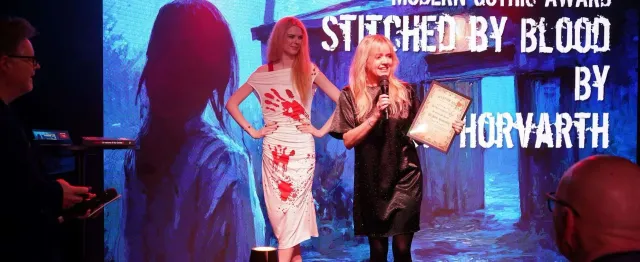
Chris: So, yeah, I, I, I, as we were talking, I was wondering, I wonder if it’s made it or not. And then I realised, no, it’s probably still sitting on my desk in the office. And Dylan, because you picked up one of the big awards which Kate gave to you, what. What was it like standing on that stage and talking to the audience?
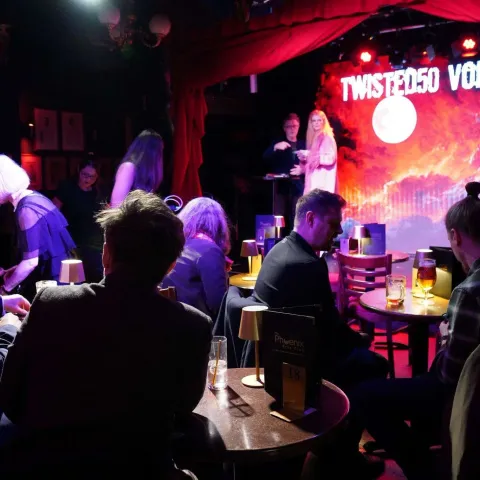
Dylan: Yeah. Thank you. No, and, you know, thank you. It was, it was brilliant to do it. I mean. Yeah, it was, it was such a kind of. I just such an exciting part of London to be in as well, with all the kind of deep in the, you know, with all theatres nearby and everything like that. And I know it’s a cliche, but it was a genuine surprise to, to win that. Extraordinary. I really wish I had planned something a little bit more for my speech, if I’m honest. But again, I mean, just most of all, as Susan said, it was just so nice to meet the other people there, to have a kind of physical recognition of it. And especially, you know, because people’s ideas were so interesting and stuff. It was really interesting to see who was there. And that there was like a father and daughter who had both won awards was so nice. And yeah, I think just the whole thing had such great energy to it and yeah, it was. Yeah, it really kind of brought it all together at the end, I guess it’s just, it’s a real kind of nice cap to.
Chris: Was lovely to give the young new writer both the awards out and see the shock and surprise on their faces because they were there really to support, you know, dad or Mum. And they ended up winning. That was, that was just a lovely, a lovely, lovely moment. And it’s, you know, we’ve always felt, I felt very passionately for a very long time. Two, two things really. One is when you create stuff, it’s really important to spend time with the people who consume it because it kind of feeds the soul. Like, they get it, they get you, they get what you’re trying to put out into the world. And also, you know, as writers, particularly as writers, I mean, filmmakers as well, and that’s obviously my, my, my primary thing, but we spend too much time on our own and we don’t celebrate our wins big or small. And that’s why I’ve always pushed very passionately to, you know, get your posh frock on, get on the red carpet. Let’s make a big deal about this. Even if it’s, you know, it’s twisted 50, it’s, it’s not the biggest competition in the world, but we’re certainly going to make a big noise about it because we can. And that’s, that’s a good enough reason. So, yeah, so it was a really, really great evening and I, I’m already looking forward to the awards of twisted 50, volume four, which are probably a year away, but we’ll, we’ll see how the, the time scales work out for that. Well, we’re kind of coming towards the end of, of the conversation. Is there anything any of you would like to say about your experience or any final bit of advice you might want to offer to somebody who’s perhaps hesitant? I mean, Ben, I’m thinking about you now. You know, kind of not procrastinating, but. Hesitant.
Ben: No, that’s definitely the word.
Chris: Okay, there you go. I didn’t want to.
Ben: No, no, it’s, oh no, it’s, you know, it’s very easy to have a lot of self doubt about these things especially. Is it something if you, you’ve been writing for, you know, a long time or whether you used to write when you were a lot younger and then things get in the way as you get older. But yeah, Twisted50 is a really good opportunity just to throw yourself back into it. And yeah, I just, and it’s an amazing feeling, you know, it’s, you know, every, every, every stage of the process was kind of like a hurdle for someone that has a bit of like, you know, you do get the lack of confidence about these things and you know, the first hurdle. But I love submitted it now and you know that first comment you get from someone saying I read you read your story and I really enjoyed it. And, and then when you get a, you get an email saying you’ve made it into a book, it’s an incredible feeling. And, and then, and then you get like friends and family contacting you, being like, I’ve bought your book, you know, I’ve read your story. It’s fantastic, you know, and, and all that for just sitting down and just doing something that you actually really love doing and just having the bottle to give it a go.
Chris: Yeah, it’s such a really brilliant point there, Ben, about, you know, when you say I’m a writer to most people, they kind of glaze over and nod, but the moment you say, oh, and you can buy it on Amazon, that’s absolutely.
Ben: Yeah.
Chris: What? And off they go and they buy it and, and I’m always pleased that we can manage to get it out for Christmas. So you can, you can buy it for those that you love and you can also buy it for those that you don’t love because you can’t give them, giving them some horror stories is always fabulous. So, yeah, I love, I love that, that, that perspective of, of the real world, the, the world out there, you know, your closest friends and family, but the wider world gets to see this work, gets to have a say, gets to experience it. It’s so, so very, very important. Susan, what would you say to anybody who may be hesitantly deciding or not deciding to contribute to the book?
Susan: Well, I have been writing for quite a while, but I mean, screenplays that didn’t get made yet. And I just have my first publicated fiction story, so that’s, that in itself is just great. And I had people contacting me on LinkedIn saying how wonderful it was, and they bought the book and they loved it and all that amazing. I mean, old friends, old friends from school, you know, my brother bought a book. He never buys books.
Chris: Turned him into a reader again.
Susan: Yeah, well, he does like horror film, so it’s not that crazy, right? Yeah, yeah.
Chris: So amazing.
Dylan: And Dylan, I guess it almost ties into what we’re saying earlier about like, you know, don’t be afraid if you’ve got an idea you think is really horrible. Like, because the book, in a good way, in a very positive way, the book is really horrible in places. I was really surprised by quite how full on some of the stories were and how they. People really do push it. And even like Ben and Susan yourselves, the way you use kind of, you know, modern life and stuff are so interesting in your stories. I think it’s a genuinely, legitimately, really good book of horror short stories. It’s not just something that’s come together for a competition and then, well, that’s just, that’s just what it is. You know, it, it legitimately is really good. So I think, you know, just do go for it. You can really push an idea. You can have fun with it, even if you just get a bit. Even if you just accept. I might just get feedback for the story and it’s worth doing it just so that you can’t really lose it because you have to read and get feedback. That’s so much better than a lot of competitions where you won’t even get an email to confirm that you’ve lost. And that’s like the. You, you just never hear from it ever again. It just disappears into the. There’s almost, there’s no disadvantages, only some very potential positives to entry.
Chris: Right? Yeah. Again, really, really salient points that illustrate why the, you know, the Create50 model works so well for people. Because it’s not really about the winning, it’s about the part. And it’s a cliche to say it, it’s about the participation, but it actually really is in this case. And, and, and even with the winning, as you pointed out, Dylan, like, the odds of actually being included in the book are pretty good. I don’t know whether the.50 50, but they’re not far off.50 50 at the current submission rates. And I would really love, you know, twisted 50, volume four to get to, you know, 500 submissions. That would be really, really cool. And it would really energise the community to be even more audacious with, with their storytelling. And Ben, you know, your point about it being available on Amazon, I don’t know whether anybody here has managed to get hold of the hardback version of the book. It’s crazy. Like, it is. It’s like when I got it, I was like, oh, my God, this is a thing of beauty. Like, I wasn’t prepared for just how it felt in the hand. And, you know, I’m of that generation that would, would buy stuff, you know, magpie generation, where you collect stuff, but it’s a proper collectible item, which, you know, it came out so, so very well. So absolutely thrilled by that. Okay, well, look, I think we should probably bring this to a close, so I want to thank you, Ben, Dylan and Susan. So give yourselves a round of applause. There we go. We’re all clapping now, awkwardly. And if you’re listening to this, do go over to twisted50.com find Twisted 50, Volume 4. Or maybe, you know, you’re listening it to a year, and we’re in Twisted 50, volume five, and get writing and get submitted. And I just also, I also want to do a. A name check and dedicate this episode to Amy, Ben’s sister, because Amy was there right at the very inception of Twisted 50, volume three, and. And really forced it into existence with me because I was quite resistant to it. But she. She was there pushing and making it happen. So thank you, Amy, for being such a rock star. Okay.
Ben: Thank you, Amy.
Susan: Thank you, Amy.
Dylan: Thank you.
Chris: Thank you, everyone. Thank you, Amy. And happy nightmares with your writing. And I look forward to reading everybody’s next demented stories.
Written by
Chris JonesPassionate about all things film, I have spent my life watching movies, making movies and helping others make their movies too. Most recently I have been directing Splinter Unit on 'Mission: Impossible Dead Reckoning', parts 1 and 2 for Paramount. I also executive-produced 'The Enfield Poltergeist' for Apple TV+. Deeper into my past, my early major projects include action thriller 'The Runner', serial killer thriller 'White Angel' and paranormal horror 'Urban Ghost Story'. I co-created and authored The Guerilla Film Makers Handbook series, published by Bloomsbury. There are now eight books in the series. More recently I have run a series of London-based festivals, kicking off with the London Screenwriters Festival which attracts over 1,000 professional screenwriters from around the globe annually. I also set up and run TEDxEaling, an annual TEDx conference on storytelling and human communication. In 2009, I made the multi-award-winning and Oscar-shortlisted 'Gone Fishing', the whole process being heavily documented on my blog. In 2014 I completed my fourth feature film, the crowd-created 50 Kisses which entered the Guinness Book Of Records for most screenwriters on a feature film. Following this success, I founded Create50 to continue the idea of crowd-created projects. Twisted50, our first book, was published on Halloween 2016 and immediately toppled Stephen King from the top spot on Amazon. Five books have followed in the Twisted50 series and we are working on the sixth now. During the summer of 2016 I trained to become a master Firewalk instructor and now regularly take people across the hot coals for charity. Late 2017 I directed the short film 'Seeing Him' which collected a ton of awards too. Over the following years I continued to make award-winning shorts, such as Meet The Nativity and Never Too Late. In the summer of 2022 I premiered Impact 50, the second feature-length movie from Create50. This time I directed the segment at the start of the film, with Olivia Williams as the President, and written by Joe Eszterhas. In the summer of 2022, I also joined the Mission: Impossible 7 and 8 productions as Splinter Unit director. At Halloween 2023, the Apple TV+ show that I co-executive-produced, 'The Enfield Poltergeist', premiered. I run regular filmmaking workshops for filmmakers both online and in person. Some people ask how I began making films? Like most filmmakers of my generation, it was with a Super 8mm camera, summertime and school friends, usually after watching a behind-the-scenes TV programme on a Hollywood movie like Star Wars. My first film was a zombie horror called Necronomicon, heavily influenced by John Carpenter's The Fog. And I was hooked for life. Contact me at Ealing Film Studios, Ealing Green, London, W5 5EP, UK