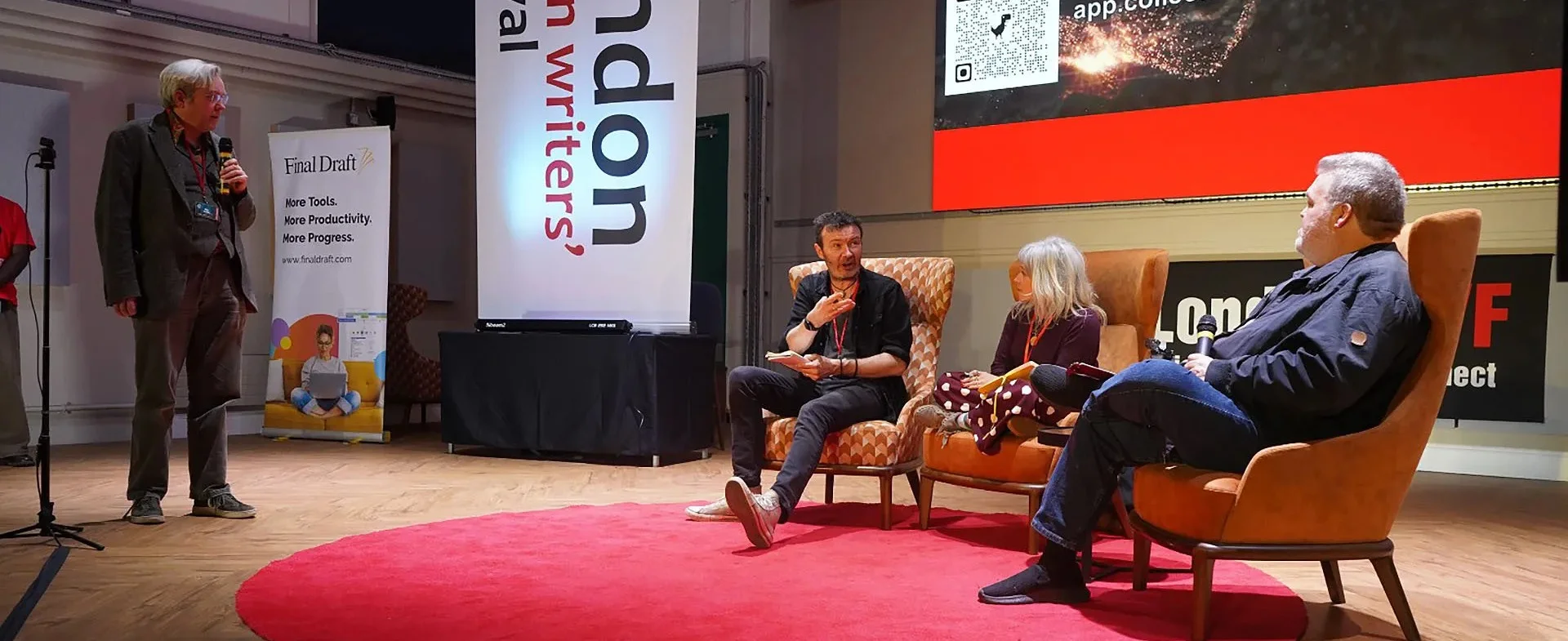
Yesterday I heard nearly 60 pitches at the London Screenwriters Festival by Eleanor Greene

25 June 2026 · 2 min read
Setting aside the constrained nature of the sessions, (each writer has either 5 minutes or 45 seconds to pitch, depending on which session they attend) here are some things I noticed.
What worked: smiley people. People who asked me a question or responded well to mine. People who wanted to make a connection with me as a person and not just because of what they hoped I might be able to offer. Pitches that heralded their hero, (or anti-hero), what happened to them – why – and how they ended up pretty much all worked. (It’s a classic beginning, middle and end thing). I loved the writers who had the confidence to use less words, but good, interesting words, with a clear vision and confidence in their set up and pay off.
What didn’t work: muddled ideas. Too many ideas contained in one idea. An idea pitched as a 14 minute short with 4 main characters, a gang that needed defeating, and at least 6 locations. (Never going to work as a 14 minute story!).
There were two pitches from the morning session (5 minute pitches) that stuck with me: the story of two female gladiators inspired by a pair of bronze plaques in the British Museum. It was not the best pitch in the world but the writer allowed me to help her reshape it and the image + the idea stuck. Female gladiators – who knew?
The other pitch stuck for a different reason. The writer sat down saying he had never done this before, which I read as an invitation to listen hard and be as constructive as possible in my 120 seconds of feedback. He pitched a ‘sort of Romeo and Juliet’ in a tough town. But went on to focus on her story of joining a gang, and how the series is about the personal betterment of th characters. I told this writer that we don’t tend to watch love stories because of the personal betterment of the characters. This might well be in his head as he’s writing his story – but it’s not how to sell the show!
This writer seemed extremely downhearted when we parted company. I’d even say he was irritated – why couldn’t I see how brilliant his pitch was? I clearly didn’t hadn’t understood him.
The thing is. I only had his words with which to paint a picture in my head. And most of his words didn’t paint a picture I wanted to look at!
Words, descriptors, verbs, the energy with which you describe a show are the things that make the show!
Perhaps I should have been less honest. But that wouldn’t have helped him. What do you think?
Written by
Eleanor GreeneI'm an EP with more than 25 years experience script editing, producing, and EPing High End Drama for UK TV. I'm also a teacher, facilitator, and provider of workshops for the screenwriting community and run a script consultancy offering private feedback on pilots and screenplays.