Your Characters are the Key: Unexpected Lessons in Worldbuilding with Genre Legends Frank Spotnitz and Peter Harness
8 July 2026 · 7 min read
I always enjoy a good discussion about worldbuilding. That’s even after I’ve already written quite a lot of speculative fiction (AKA science fiction, fantasy, horror, and the things between) and hosted a series of interviews and panel discussions on the subject back in my previous life as a prose author. There is something really fascinating about learning where people get their inspiration and how they went through their thought process for dealing with the endless string of “what if” questions. Brainstorming and daydreaming can be so much fun. After all, as Einstein once mused, imagination seems to be our intellect having a good time.
NOTE: You can watch this session in the free Library HERE.
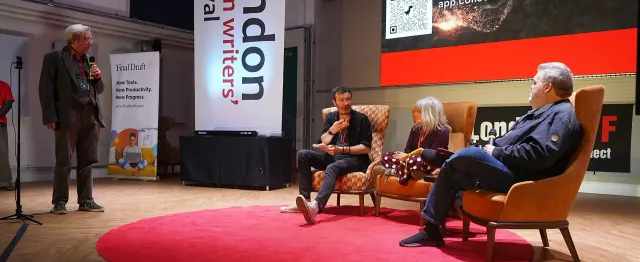
So I grabbed my beverage of choice and happily settled in for the replay of Bending Our Reality: Creating Compelling Alternate Worlds panel moderated by Izzy Power and included Frank Spotnitz (X-Files, Dr. Who, Man in the High Castle) and Pater Harness (Constellation, Jonathan Strange and Mr Norrell). I expected to hear some interesting anecdotes, but I was not expecting the conversation to veer so early and so strongly to the subject of which one matters more in a genre piece: characters or worldbuilding. Spotnitz and Harness strongly agreed that making sure an audience connects with a character is just as important if not more important in a story where they also have to learn a bunch of new rules.
The 5% vs. The 95%
Spotnitz shared that when he joined the X-Files, he was much stronger on writing plots than he was on writing characters. Luckily, he joined the writing team well after Mulder, Scully, and their dynamic was established, and he talked about being grateful to those who had come before and done that heavy lifting.
The X-Files premiered in 1993, and over time became one of the first television shows with an active online following. Spotnitz was one of the only writers brave enough to read the message boards and he said he was astounded by how astute and observant the fans were. They picked up on every detail, even without very much exposition much of the time. However, he also pointed out that even though the people on the ball were “loud” on the internet, it still was maybe only 5% of people who watched the show who would go to the trouble.
The other 95% – simply isn’t ever going to be that invested. (Sorry!) They won’t catch every episode, or they are folding laundry at the same time, or be distracted by their crappy day, or any number of things. This observation sounded a bit like a condemnation of short attention spans at first. Rather, Spotnitz was pointing out that although details matter a lot to a few vocal people, the broad emotional strokes of the character journey is ultimately more important. That’s what matters to the vast majority of your audience.
He also pointed out that although the 5% may be able to pay such close attention they could make logical leaps when it comes to elements of the plot, the writer always gets the opportunity to “win” at the character journey.
The Importance of Your “Bible” (Even Though No One Reads Them)
Harness was quick to agree about the vast difference between the sheer volume of details you will figure out and what anyone else wants to know, even if they are working on the show with you. For instance, one of his shows had a bible with over fifty pages, mostly about the intricacies of the science involved. Even though all the information was readily available, it was clear that people never even cracked open the binder. In other words, plan on being your own 5% even among colleagues.
What they did do, however, was come to him regularly and ask specific questions. He was able to answer them only because he had gone through the process of making the bible. It reminds of the occasional science test back in high school where we were allowed to have one notecard worth of notes for reference. Just the act of making that card with the painfully tiny writing was enough to get the information at the tip of our brains, and we rarely even glanced at the cards when we sat down to take the test. My teachers knew exactly what they were doing. Just the act of organizing your thoughts enough to put them into writing makes you think about things in a different and more complete way. And once you’ve written it down, it’s much easier to remember all those details.
Your Characters and World Should Be Intertwined
So, if 95% of your audience is going to care about your characters more than your world, but the world is integral to the story, you must make the world integral to your characters. For example, no one needs to understand how the automatic doors on a spaceship work until they stop working at a key moment in your character’s emotional journey.
Think of your characters as operators within a system. The system can be revealed by understanding how operators interact with it, but explaining the system is not the goal. We will glean information about the system by observing how the operators operate (or don’t) within it. People who are bad at their jobs still convey information through failure. You can learn just as much about a world by seeing someone tell a lie as you can by getting an info dump, but you also learn about the character through the lie and reactions to the lie.
Put The Audience “On The Shoulder” of Your Characters
There’s a very good reason why so many genre shows begin with someone starting a new job or being transported to a new setting. When your protagonist is a fish out of water, the audience gets to learn how to walk on land right there beside them. This is also one of the most relatable things a person can go through. Nearly everyone has had some kind of “first day” where they were nervous or felt like an imposter, so most people will automatically empathize with any character going through the same thing. We understand those mundane stakes even if the complex science of putting lightning in a bottle sounds like gibberish.
Keep in mind, this doesn’t mean you can only write fresh-faced cadets or other 20-somethings as protagonists. But it does mean even your grizzled expert with 30+ years of experience should get tossed into a situation where on some delightfully unexpected level that expertise ends up meaning absolutely nothing. Think about all those “buddy” procedurals like Bones or Castle where you have one brilliant but emotionally stunted character and another that offers emotional or philosophical challenges that drive a relationship story alongside the whodunnits. These kinds of character clashes automatically suggest a trajectory for growth and change, for decisions, missteps and consequences.
This is character. This is what will hook your 95%.
(Psst! If you’re interested in learning more about an approach to defining your protagonist’s journey through this “dark forest moment”, check out my post on Mastering Your Middle Act)
If Someone “Doesn’t Get It”, That’s On You
The final bit of insight from this panel that I want to share isn’t about characters, but it feels like way too good of a tip for worldbuilders to leave out. If you listen to interviews with filmmakers, it’s common to run into the occasional discussion of “vision” and being true to oneself as a creator. This is seen as noble and the mark of a “real” artist.
Spotnitz, on the other hand, let us know that any time a project he worked on didn’t come out right, it was a script that he wrote and the shortcomings were on the page. He gave the example of listening to music someone composed for a scene. If the music is tonally completely wrong, that isn’t automatically the composer’s fault. It means the writer didn’t do a good enough job of communicating how it should feel. I thought this ownership of the bad and the ugly alongside the good was really refreshing and healthy.
He also talked about what he called “the politics of collaboration” and getting everyone on board to serve the same larger vision. But once you are moving from the page to the screen, the project by definition draws in others and outgrows the creator. As you have the conversations with the other departments or writers on your show, things will change. Creators are the 5% – but they also have to remain flexible when it comes to their worlds and their characters. If making a change helps the 95% – which includes your collaborators – become just as invested emotionally as the creator is intellectually, it’s at least worth considering.